November 12, 2026
Lost Women of Science Conversations: A History of Science in 21 Women


November 12, 2026
Lost Women of Science Conversations: A History of Science in 21 Women
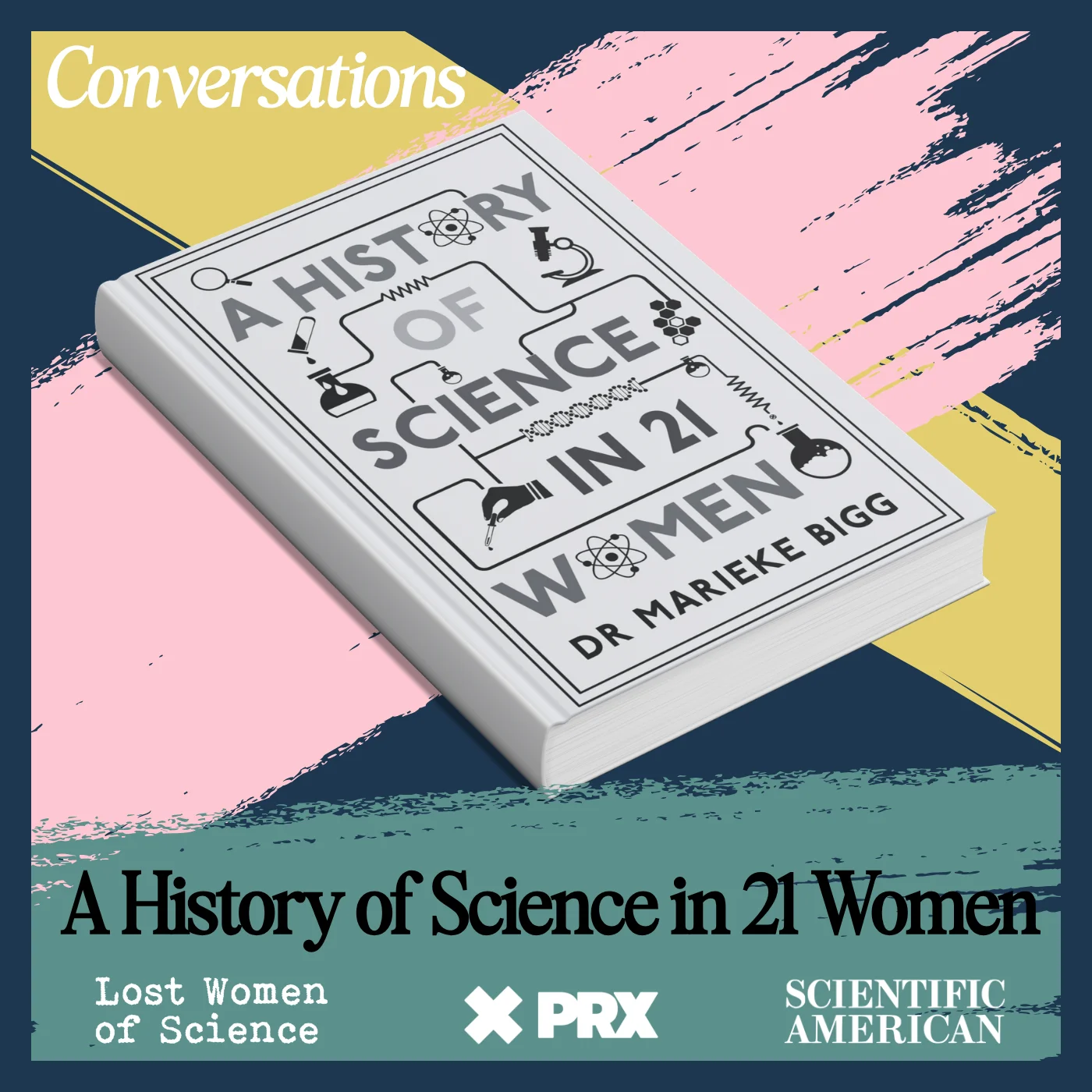
Dr. Marieke Bigg explores the lives and achievements of twenty-one female scientists who shaped history in her new book, A History of Science in 21 Women.
Episode Description
In this episode of Lost Women of Science Conversations, host Carol Sutton Lewis speaks with Dr. Marieke Bigg about her new book, A History of Science in 21 Women. In the book, Bigg set out to tell the story of 21 women scientists spanning different fields throughout history. She writes about well known names, like Marie Curie and Rosalind Franklin, all the while challenging common stereotypes and beliefs about their work. The book also reveals the stories of lesser known scientists that never got the recognition they deserved, like Anne McLaren, who was the focus of this interview.
Bigg asks us to think differently about what scientific achievement really looks like, how we decide who gets remembered and for what.


Carol Sutton Lewis is a co-host of Lost Women of Science and co-presented our third season about Yvonne Y. Clark, “The First Lady of Engineering.” She also hosts and produces the award-winning podcast Ground Control Parenting with Carol Sutton Lewis.

Gabriela is a freelance audio producer, editor, and sound engineer. She currently works for Patreon, and NPR’s Next Gen Radio. Previously, she produced podcasts at Duolingo and NPR, including Up First and Hidden Brain.
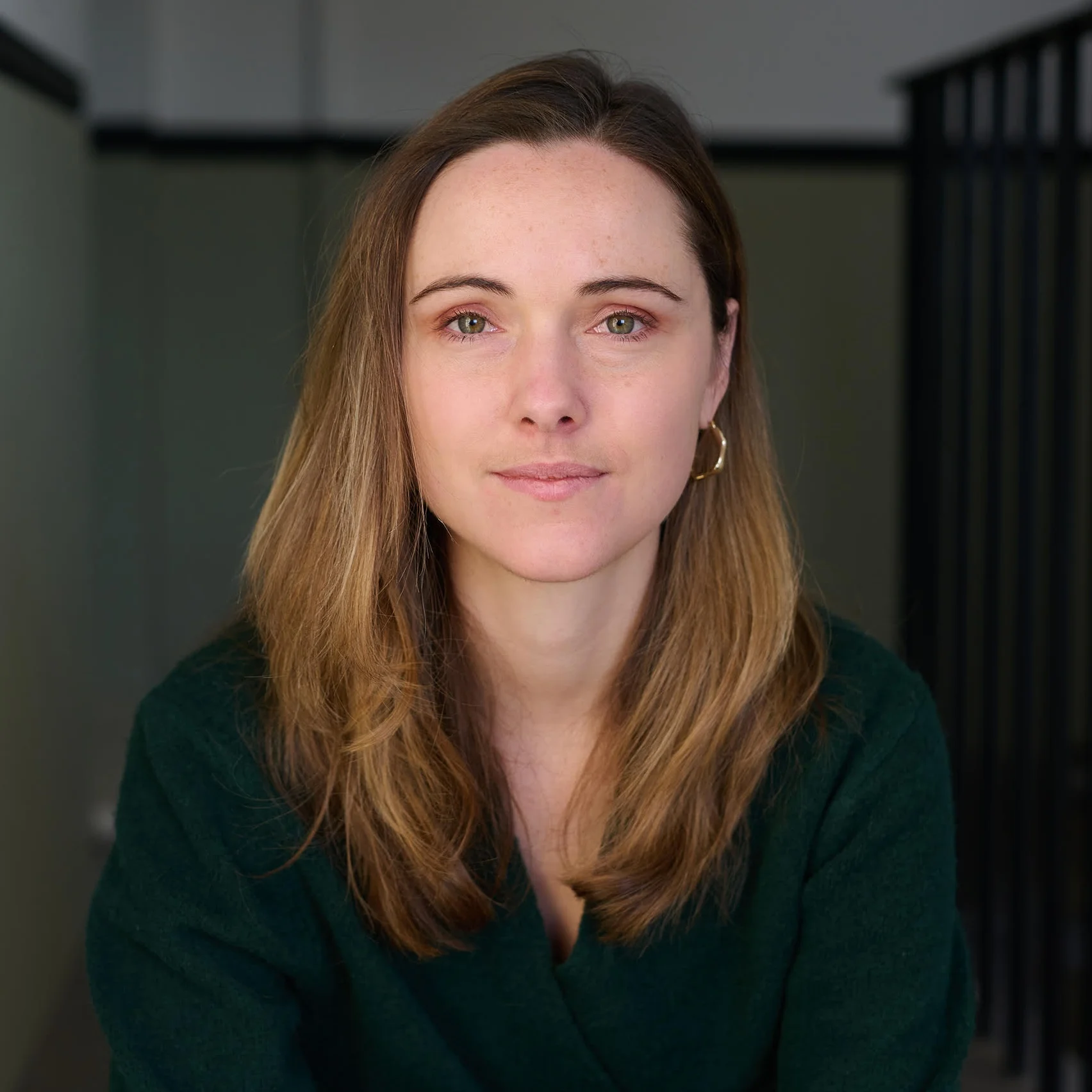
Dr. Marieke Bigg is the author of both fiction and non-fiction books, including This Won't Hurt and Waiting for Ted. She holds a PhD in Sociology from the University of Cambridge, where she studied the technological transformation of human reproduction and did her dissertation on Anne McLaren. Photo credit: Paul Stuart
Carol Sutton Lewis is a co-host of Lost Women of Science and co-presented our third season about Yvonne Y. Clark, “The First Lady of Engineering.” She also hosts and produces the award-winning podcast Ground Control Parenting with Carol Sutton Lewis.
Gabriela is a freelance audio producer, editor, and sound engineer. She currently works for Patreon, and NPR’s Next Gen Radio. Previously, she produced podcasts at Duolingo and NPR, including Up First and Hidden Brain.
Dr. Marieke Bigg is the author of both fiction and non-fiction books, including This Won't Hurt and Waiting for Ted. She holds a PhD in Sociology from the University of Cambridge, where she studied the technological transformation of human reproduction and did her dissertation on Anne McLaren. Photo credit: Paul Stuart


Further Reading:
A History of Science in 21 Women. Simon & Schuster, 2026
From Curie to Cavendish: women under the microscope. Craig Kenny CamdenNewJournal, 2026
Episode Transcript
Lost Women of Science Conversations: A History of Science in 21 Women
Marieke Bigg: We have this very individualistic narrative, like a hero's journey of scientific discovery that depends on individuals working in an individual field against the odds, overcoming and making a single breakthrough, and that's just not how Anne worked and she didn't pretend to.
Carol Sutton Lewis: Welcome to the latest episode in our series, Lost Women of Science Conversations, where we talk with authors and artists who've discovered and celebrated female scientists in books, poetry, film, theater, and the visual arts. I'm your host, Carol Sutton Lewis.
On our show, we dedicate ourselves to revealing the stories of countless women who've made important contributions to science, but whose names and stories have largely disappeared from our collective memory.
This is also the starting point for a new book, A History of Science in 21 Women, by Dr. Marieke Bigg. Dr. Bigg is the author of This Won't Hurt and Waiting for Ted. She holds a PhD in sociology from the University of Cambridge, where she studied the technological transformation of human reproduction. In this book, she tells the story of 21 women scientists spanning different fields throughout history and asks us to think differently about what scientific achievement really looks like, how we decide who gets remembered and for what. One of these women showcased in the book is Anne McLaren, a pioneering embryologist whose work helped transform our understanding of reproduction and embryonic development.
It's thanks to her that we have reproductive IVF technology as we know it today. McLaren's contributions went far beyond the laboratory. She was involved in debates over the ethics and regulation of embryo research, and she spent much of her career building connections among scientists, policymakers, and the public.
For example, she spent time speaking directly with expectant mothers about their opinions on human embryo research in Britain in the 1980s. Her work on that committee shifted public opinion from vehemently against human embryo research to largely in favor, and led to legislation that is still in place today.
Despite all of that, her achievements went virtually unrecognized because she didn't make one traditional, quote, breakthrough discovery. In her book, Dr. Bigg asks, "What if some of the most important work in science is the work we don't always recognize?" To explore this question and tell us more about Anne McLaren and some of the larger ideas behind her book, I'm happy to be joined by Dr. Marieke Bigg, author of A History of Science in 21 Women.
Welcome, Marieke.
Marieke Bigg: Hi. Thanks for having me.
Carol Sutton Lewis: Hi. Really happy to have you. So Marieke, you chose 21 women from very different time periods and scientific fields in your book, and you write about some well-known scientists, like physicist and chemist Marie Curie, and anthropologist Jane Goodall.
How did you decide whom to include?
Marieke Bigg: It was very difficult, and I constantly encounter scientists who I wish I had included. But I guess I had some that I knew I wanted to include, Anne McLaren being one of them. I encountered Rosalind Franklin also during my studies. I just felt passionate about wanting to tell their stories.
Then it was a bit of a negotiation, I guess. Just the realities of publishing a book for, you know, a broader audience meant that we really wanted to include some of the better-known stories, but maybe also reveal some aspects of those stories that were less known, and new perspectives on them. And it was important to me that I got some diversity and types of backgrounds.
You know, the list is obviously very incomplete, and there are scientists from other parts of the world that I wasn't able to include and fields I wasn't able to include. I mean, 21 is not a lot, but I did what I had to.
Carol Sutton Lewis: I'm sure by the time you were done you were like, "21? It could be 121."
Marieke Bigg: Yeah, it could be a thousand.
Carol Sutton Lewis: However, we're glad you stopped so you could get the book out.
Marieke Bigg: Yeah.
Carol Sutton Lewis: And many of the stories in your book are so much a part of the Lost Women of Science focus. As you know, we focus on women whose accomplishments haven't been discovered or have gone unrecognized, but your work includes more well-known women.
Can you tell me about that?
Marieke Bigg: Yes. If I were to describe what my book is doing compared to what your brilliant project is doing, maybe it’s that I'm interested in exposing the forgotten aspects of science, capacities involved in science, and ways of doing science that are often feminized.
So I include both women who were just completely forgotten and whose work are forgotten, but I also include better-known women who have maybe become so well-known, they've become kind of tokens for a quote, unquote–women in science or these symbols, and in becoming these go-to figures for women in science, we've also lost the nuance and the depth of their stories.
So I'm also trying to recover some of those stories, to revisit them and see what we've missed and what we can learn from them.
Carol Sutton Lewis: So let's turn to Anne McLaren. How did you discover her and how did you decide to include her story along with the others in your new book?
Marieke Bigg: So I did my PhD on the scientist we're discussing today, Dr. Anne McLaren. I discovered her quite by chance when I was going through some archives at the British Library in London, and I was looking for interesting stories, really. I'm a writer as well as a sociologist, so I was just on the lookout for stories that might grab my interest.
And I came across Anne's archive, and I was just really captivated by her story because it was so futuristic. And there were elements to her work that involved working with NASA, sending mouse embryos into space. She was also the daughter of a famous London socialite.
So her mother was very upper class. She was at the center of a circle of really interesting literary and artistic figures like the Sitwells and H.G. Wells, scientists, socialists, and writers. Even the queen would come over for tea. So she grew up in this very upper-class environment, but then became Marxist, and was really interested in the kind of public good in her science.
So there were themes that I kind of landed on around her style of approaching science. She was a great communicator. She really established a lot of collaborations across different fields. So these kinds of ideas allowed me to then look at these other women's stories and understand their particular contexts and circumstances, how their work was sort of being coded and how they were being dismissed.
And more new insights emerged as I researched each of these scientists individually and their own stories at different points in history. But I think McLaren just gave me an initial understanding of the kinds of obstacles women face both practically but also culturally as they try to establish their careers.
Carol Sutton Lewis: When you spoke with people who had worked with her, did you get the sense that she was aware of being under-recognized or that it impacted her at all?
Marieke Bigg: I think she was aware that she was working in an unconventional way. And when she talks about her own approach to her career, I read a lot of her reflections, trying to kind of theorize or describe her way of working, and she said, "I know I have an unconventional research subject. I'm not a scientist who focuses on a single subject for her entire career."
She always said, "My research subject is the entire life cycle of the mammal." From one generation to the next. So she knew that it wasn't considered a single focus. So, I think she was aware of it, but it didn't seem to bother her
Carol Sutton Lewis: Right.
Marieke Bigg: From what I could tell. And she, like I said, was also privileged. It didn’t prevent her from pursuing what she wanted to pursue. It prevented her from being recognized, you know, from getting the kind of accolades that, maybe, she should have. But she was still able to do the work that mattered to her.
Carol Sutton Lewis: We'll be back with more right after the break.
Carol Sutton Lewis: She isn't very well known, but to those who do know her, she's remembered primarily as an embryologist, but she did a lot more than that. Can you give us a brief overview of her work and how it relates to the IVF that we know today?
Marieke Bigg: Sure, yeah. So like I said, she considered her research focus as the entire life cycle of the mammal from one generation to the next.
And she actually needed the knowledge and tools from different fields in order to investigate that subject. So not just embryology, but also developmental biology, reproductive science. And she said she was quite opportunistic in how she found problems because what she was primarily interested in was how does an organism's genes interact with an environment in order to develop into whatever it will become.
So she started off working in genetics, and she worked on mice, and she worked with her husband or soon-to-be husband, Donald Mickey, who's also known as one of the founding fathers of artificial intelligence. And they studied mice. They were looking at coat color of mice, but trying to understand how genes and environments interact, and which is the determining factor when it comes to the phenotype, the appearance of mice.
And part of that work was developing techniques that they needed in order to do the work. So one of those was superovulation: using hormones to stimulate ovaries to produce more than one egg per cycle. So that was a technique that later became really instrumental to IVF. You know, some scientists would spend their entire career on this one area, but she soon decided to hop into another research area and she moved into implantation and the window for implantation in the reproductive cycle.
So that led her into immunology. So there, she did some work understanding also how a sperm cell becomes a sperm cell, and that foreshadowed some work developing immunocontraception in humans. Then, she did a lot of embryo transfer experiments where she was transferring embryos between mice, which was a discovery that was obviously very important to IVF in humans later.
Carol Sutton Lewis: Mm.
Marieke Bigg: She worked on embryo culture, so really trying to figure out what environment an embryo needs outside of the womb in order to survive. Which was, again, very relevant to IVF. She also worked on genomic imprinting, so understanding when the parent's genetic influence is felt in the growing embryo and when the embryo itself takes over, and these were all kind of epigenetic questions.
So I guess that's also good to mention that she was working at a time when genetics was big and booming. In the '60s the scientific world in the West was really interested in genetics. The structure of DNA that had been cracked. You had the Human Genome Project emerging later in her career. The focus was very much on genes, and she was kind of consistently and determinedly interested in genes, the environment, and how these two interacted. And she had an interest in epigenetics, so what influences in an environment determine how genes are expressed. She kind of took a view that wasn't very popular at the time, which may be part of the reason that she wasn't so celebrated by the scientific establishment.
Carol Sutton Lewis: Yeah, I definitely want to talk about that because as you have described, she is an incredibly curious and thoughtful scientist who isn't content to spend ages on one knotty little problem but, instead, has dedicated much of her scientific life to going from one really fascinating issue to another one.
And thereby, contributing to so much scientific advancement. And yet, that ability to move from one series of experiments to another, which to those of us who are not scientists seems like a really good way to get a lot of things moving in the right direction, was criticized in the scientific community because she wasn't serious enough about one area. Do you think that contributed to the way in which she was not a Nobel Prize candidate?
Marieke Bigg: Yes, I did. That phrase exactly. When talking to colleagues—even those who in the same breath celebrated what she did and the impact—even about their work, which was testament to the impact she had, would say that she was not quite a Nobel Prize-worthy scientist for that reason.
Because there's this implication that she just didn't stick to her lane. She didn't stick to one field and dedicate herself to that. As you were talking, the word atomized came to me, just how the scientific world–or the way it is in the West–is very fragmented into different fields.
At the same time, that collaboration is often how new discoveries emerge. And how we have this very individualistic narrative, like a hero's journey of scientific discovery that depends on individuals working in an individual field against the odds, overcoming and making a single breakthrough. That's just not how Anne worked and she didn't pretend to.
What you're saying about moving between fields as a really effective way to get things done aligns with how she saw it. She was very pragmatic; when she felt her current work had run its course, or if she saw that another set of knowledge or tools would really carry her work forward, she would do that.
And the skill of moving from one highly specialized field to another and being able to translate that problem across fields for a different set of specialists is a very advanced ability. A very advanced skill that is not recognized in all of this.
Carol Sutton Lewis: So it's not surprising that she's considered a connector of people and a connector of ideas. And, in fact, she did a lot of work talking directly with expectant mothers during the debates about human embryo research. Can you talk a little bit about that?
Marieke Bigg: Yeah. So following the introduction of IVF and the birth of the first IVF baby in Britain in 1978, there were extensive public debates about the ethics of human embryo research. Not so much IVF itself, surprisingly. I think scientists expected that to be a bigger ethical debate, but the public sentiment was largely quite enthusiastic about what they were terming miracle babies.
But the research that was needed to support IVF and to make sure it was safe—research on human embryos—that became a controversial topic.
And Anne McLaren was very involved in those debates, and she was on a committee that was tasked by the government with coming up with legislation, guidelines, and guardrails for that research. And Anne McLaren was the only scientist on that committee, so she had a very unique role in explaining the scientific basis that they were talking about.
But she took that role far beyond just relaying facts. She was really interested in talking to members of the public about what was important to them when it came to this. So she was really trying to understand what people needed reasonably to support research. So what were their aims? What were their priorities?
And she found that when she was talking to expectant mothers about the possibility of genetic disease and how research might be able to screen for genetic disease, that was something that mothers could really get on board with, and that became a key rationale and key motivation in the development of the policy guidelines around human embryo research.
And genetic screening also became one of the key inventions to come out of that period of research, so she was very involved in guiding research in a direction that she thought reflected the needs and priorities of the larger community beyond the scientific community.
Carol Sutton Lewis: Mm-hmm. I mean it really points to what we were saying earlier about scientists tending to work individually and be very focused on one thing and have careers that end in a discovery, perhaps, but it's very much away from the general public. I mean, they reveal their results, but the public is not involved in it. Whereas she took a completely different perspective, a much more open and public-minded perspective, where she thought that the public was an important ally and collaborator in scientific development.
I mean you wrote that, and I'll quote from your text, "She believed that the public should have a choice about the direction science takes, and that scientists have a duty to explain their work. Many of her contemporaries resisted this oversight." I mean, that fascinated me as I was reading this particular chapter and thinking about the work that you've done. You’ve mentioned that this duality–this conflicting perspective–makes the case that we may have too narrow an idea of what scientific achievement looks like.
Can you talk a little bit about that? And delving so deeply into Anne's work, did it change the way you think about what it means to be a scientist?
Marieke Bigg: Yeah, it did. You know, I wasn't a scientist myself before studying her work. I spent, you know, years in the archives with her lab notes, with her talks and reflections and letters, and just seeing how much she was developing. Not just, you know, designing research, but she was developing a way of thinking.
She was really developing a kind of model that she was testing across all these different areas. And also a kind of ethics, a kind of philosophy about how her Marxist politics related to the science she was doing. And that revolved very much around the public good.
And there was also this element of IVF being such a public-chasing scientific innovation that really called this community of scientists. Embryologists who had previously been quite reclusive as far as these areas of science go, to take on a more public facing role.
So there was just something about her particular moment in history, her kind of style of thinking and doing things that was very much about finding metaphors, finding stories, translating findings across fields. For non-specialists, this helps us understand that the work of translating, communicating, developing relationships, and ushering in policy, legislation, and frameworks is all an essential part of doing science.
And there's a bit of an analogy to her research subject there, which is gene-environment interactions. Science doesn't happen in a void or a vacuum. It depends on people, tools, and on historical context. So understanding that it isn't just a hero's journey. It's a collaboration.
Carol Sutton Lewis: Reading about her in particular really did make me think about the two issues with women in science. I mean, there is a great body of work, a lot of which you cover and which Lost Women of Science covers about women who may have done the deep dive, but their work was not recognized for a variety of reasons. But then this whole concept of working differently–and I don't want to generalize or stereotype–but a woman's approach, one that is more collaborative and inclusive.
There are two separate ways in which women were not being recognized as they should have been.
Marieke Bigg: Yeah, exactly. It's the double bind, isn't it?
Carol Sutton Lewis: Right. It is.
Marieke Bigg: Yeah. You can't win.
Carol Sutton Lewis: So after researching 21 women for this book, we focused on Anne today, but there are 20 other women that have really interesting stories. What, if any, patterns did you see in the ways that women's contributions to science have been either remembered or overlooked?
Marieke Bigg: I mean, I think you're touching on some of them there—the way that women did things a bit differently—often because they didn't have the formal education that their male colleagues had. So they came in with a bit of a fresh perspective. Jane Goodall's a good example there.
She came in and rather than studying animals in labs and numbering them, she went into their natural habitat, observed them, gave them names, and had this more intimate way of working. She was ridiculed at first, but ended up leading to lots of breakthrough insights.
So you have a lot of stories like that where women's approaches are feminized and dismissed. Where women are being stereotyped as mothers, housewives, or sexualized as objects, and that really becomes the focus on how they're treated within the scientific world but also in the media and how this works to discredit them.
How women who are working in a more traditionally scientific way are pushed out or are not included in the “boys club establishment”. Rosalind Franklin is a really good example of this. She did a lot of the really crucial work on the structure of DNA. But she was kind of bullied and excluded from this network of men who were exchanging findings and pushing for that breakthrough discovery.
So you see a lot of that. And then you see the sort of quieter women doing the work in the background, work that isn't traditionally valued, that isn't about breakthroughs but perhaps preventing disaster. Or this kind of meticulous work, which Rosalind Franklin did, of confirming findings and not jumping to conclusions.
So women being more thorough and less driven by the need for kind of recognition and accolade, which maybe they know they're not likely to get anyway. Yeah, there's a lot of these patterns, and through history what was so striking was seeing how this persists.
I start in the ancient world with Hypatia, and I go all the way through to the present day and these themes recur through history. And these ideas are just so embedded in our culture, it's so hard to even notice them a lot of the time.
Carol Sutton Lewis: It is. But what do you hope that readers take away from your writing? It's really important how many different stories that you are bringing to light, and what's your hope for the way that the book is received by readers? What do you want them to come away with?
Marieke Bigg: Yeah, I think really allowing readers some space to question some of these givens about science and what it is and the types of capacities it requires.
So it's not just about valuing women, it's about valuing a set of skills and capacities that have come to be associated with women, but that are part of all science. So I think that's what I really hope, that people will spend time with these stories from a perspective that maybe they haven't encountered before—to really understand what these women faced but also what they did and what we can learn from that.
Carol Sutton Lewis: I love what you said about the types of capacities that science requires; it truly broadens our perspective on what makes a good scientist. What a gift that is, because it will enable young men and women—who may not think of themselves as scientists in the mode of spending half their lives on one very specific and focused discovery—to embrace the concept that they too could be scientists. So that is a great potential outcome.
Marieke Bigg: Mm-hmm.
Carol Sutton Lewis: Marieke, thank you so much for joining us.
Marieke Bigg: Thank you. Thanks for having me.
Carol Sutton Lewis: Dr. Biggs' book, A History of Science in 21 Women, is out now. This has been Lost Women of Science Conversations.
This episode was hosted by me, Carol Sutton-Lewis. Gabriela Saldivia was our producer and sound engineer for this episode. Thank you to our senior managing producer, Natalia Sanchez Loyaza; our project manager, Eowyn Burtner; and co-executive producers Katie Hafner and Amy Sharf.
The episode art was created by Lily Weir, and Lizzy Younan composes our music. Lost Women of Science is funded in part by the Alfred P. Sloan Foundation and the Ann Wojcicki Foundation. We're distributed by PRX.
If you've enjoyed this conversation, please go to our website, lostwomenofscience.org, and subscribe so you'll never miss an episode. That's lostwomenofscience.org.
Please share it and give us a rating wherever you listen to podcasts.
Oh, and please don't forget to click on the donate button. That helps us bring you even more stories of important female scientists.
I'm Carol Sutton-Lewis. See you next time.
Listen to the Next Episode in this Series
More Episodes
Listen to the complete collection of episodes in this series.